
The Vagus Nerve: Where Fascia, Mitochondria, and Mind Meet
Part 4 of our 5-part series, The Body Talks: Fascia, Mitochondria & Neuro-Wellness
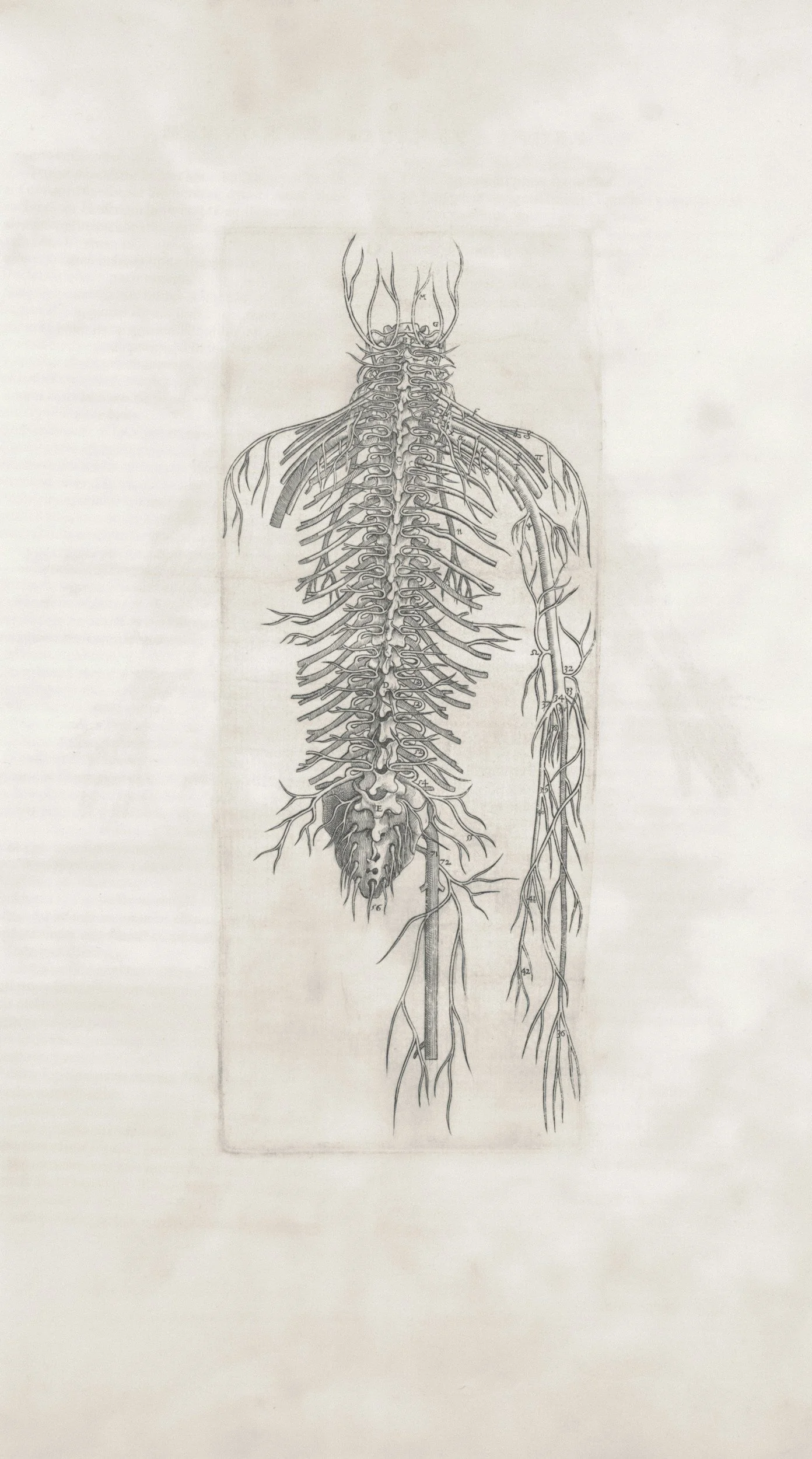
We have spent three weeks together now, building a picture of your body as a living communication network.
In Part 1, we met your fascia, the 250-million-nerve-ending sensory web that broadcasts in both directions all day long, the same network that Chinese medicine has been calling the San Jiao for over two thousand years.
In Part 2, we dropped into your mitochondria and explored how red light therapy speaks directly to the tiny enzyme called cytochrome c oxidase, reawakening cellular energy at the source.
In Part 3, we tuned the third layer, your brainwaves, and walked through how BrainTap's frequency-following response guides the nervous system into states of calm, focus, and deep repair.
Three distinct systems. Three distinct languages.
This week, we meet the interpreter. The Vagus Nerve.
Running like a wandering river from the base of your brain, down through your neck, branching into your heart, lungs, gut, liver, kidneys, and reproductive organs, is a single cranial nerve so important to whole-body communication that the ancient Greeks named it from the Latin word for wanderer: vagus.
The vagus nerve is the missing link in nearly every modern wellness conversation. And it is the precise place where fascia, mitochondria, and the nervous system sit down at the same table and finally start talking to each other.
What the vagus nerve actually does
The vagus nerve is the longest cranial nerve in your body and the primary highway of your parasympathetic nervous system — the branch responsible for "rest, digest, and repair."
When your vagus nerve is well-toned, you sleep deeper, digest more efficiently, recover from stress faster, hold less chronic inflammation, and feel genuinely safer in your own body. When it is dysregulated, almost every system downstream begins to struggle.
The measurable proxy for vagal tone is heart rate variability, or HRV, the tiny variations in time between each heartbeat. High HRV signals a flexible, well-regulated nervous system. Chronically low HRV is one of the most reliable predictors of nearly every modern chronic disease.
Where fascia meets the vagus nerve
Here is where this series becomes one connected story.
The vagus nerve does not run through empty space. It travels through dense fascial corridors, through the carotid sheath in your neck, through the thoracic outlet, through the diaphragm (one of the most important fascial structures in your body), and into the connective tissue surrounding every organ it touches.
A tight neck, a clenched jaw, a tense diaphragm, or a restricted pelvic floor can literally choke off your nervous system's most important communication highway.
This is why fascia-informed bodywork is so much more than "loosening tight muscles." Every targeted release in the suboccipital region, the front of the throat, the diaphragm, the abdominal viscera, or the pelvic floor is, biomechanically, a release for the vagus nerve. Every time we restore glide in the connective tissue around this nerve, we are widening the channel through which your body and brain communicate.
This is also, not coincidentally, exactly where many acupuncture points cluster. Points along the front of the neck, behind the ear, on the chest and abdomen, these have been used for thousands of years to "regulate Qi," and we now understand part of why. They are stimulating the vagus nerve through the fascial network it travels in.
Where mitochondria meet the vagus nerve
The vagus nerve is also exquisitely sensitive to cellular energy.
Nerves are some of the most mitochondria-dense tissue in your body. Vagal fibers depend on a steady supply of ATP to fire reliably, to maintain their myelination, and to perform the constant back-and-forth signaling that keeps you regulated. When mitochondrial function declines, through chronic stress, poor sleep, inflammation, nutrient deficiency, or the bioenergetic toll of perimenopause, vagal tone tends to decline with it.
Recent research has begun exploring red light and the vagus nerve, applying red and near-infrared light to areas where the vagus runs close to the skin, particularly the cervical region and the outer ear. Early studies are showing measurable changes in HRV and autonomic regulation from this approach. The mechanism makes complete sense: light energizes the mitochondria in vagal nerve fibers, restoring the cellular fuel needed for the nerve to do its job.
This is part of why we layer red light therapy onto specific vagal access points in our clinical work. We are not just "doing red light." We are feeding the mitochondria of the nerve that runs your entire parasympathetic system.
Where the brain meets the vagus nerve
Now layer in what we covered last week.
BrainTap, vagal breathing, meditation, humming, gargling, cold exposure, every parasympathetic practice you have ever heard about works, in part, by toning the vagus nerve from the top down. When your brainwaves shift toward alpha or theta, the brain sends parasympathetic signals down the fibers of the vagus, and the body responds: heart rate slows, digestion turns on, inflammation calms, breath deepens.
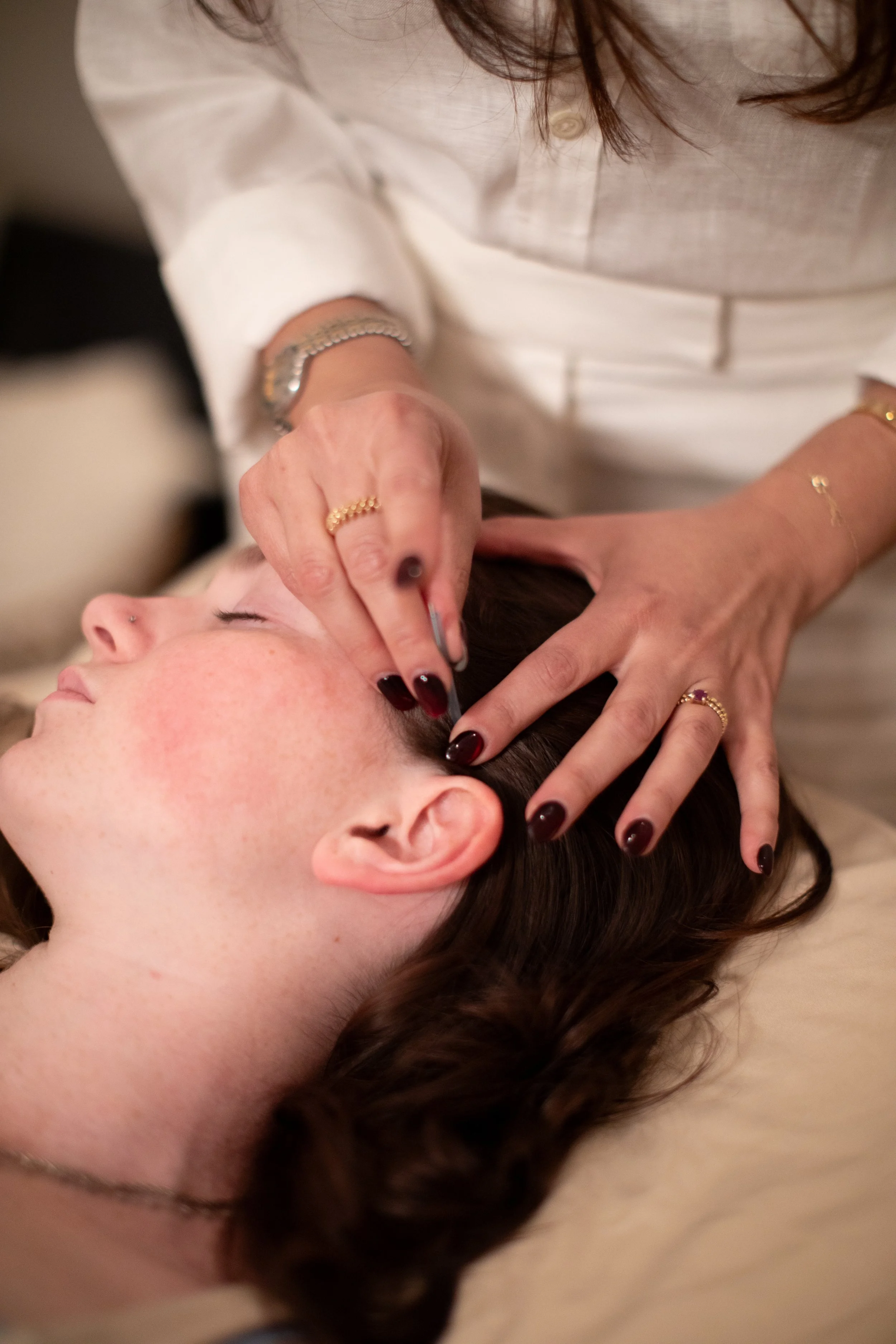
Using NADA in Acupuncture can help regulate the vagus nerve.
Acupuncture and the NADA Protocol: ancient access to the vagus nerve
Of all the tools we use at Clinical Convergence to support vagal tone, acupuncture may be the one with the longest clinical history, and one of the most elegant mechanisms.
For thousands of years, Chinese medicine practitioners have used specific acupuncture points to quiet an overactive nervous system, reduce inflammation, resolve what they called "Shen disturbance" (the unsettled, anxious mind), and restore communication between the heart, lungs, gut, and brain. What we are now understanding is that many of these classical effects were, at least in part, being achieved through direct stimulation of the vagus nerve.
Modern research has confirmed that acupuncture, particularly at auricular (ear) and cervical points, activates parasympathetic pathways via vagal afferent fibers.
The NADA Protocol takes this even further, and it is one of the most powerful, underappreciated tools in modern integrative medicine.
NADA stands for the National Acupuncture Detoxification Association, and the protocol it developed is a standardized five-point auricular (ear) acupuncture treatment that was originally designed for addiction recovery. It has since been validated across a remarkably wide range of conditions: anxiety, PTSD, insomnia, chronic stress, trauma recovery, and nervous system dysregulation — and it is now used in clinical settings worldwide, including Veterans Affairs programs, disaster relief sites, and trauma-informed care clinics.
What makes the NADA Protocol so compelling from a vagus nerve standpoint is geography. The inner concha of the ear — where the Lung, Liver, and Kidney points are located — is the only region on the external surface of the body that is directly innervated by the vagus nerve. Every time a needle is placed in that region, it is sending a direct signal along the auricular branch of the vagus nerve straight into the vagal nucleus in the brainstem. The body is not inferring a message. The message arrives on the vagus nerve's own line.
The clinical experience of a NADA session is notable. Most people sit quietly with the needles in place for 30–45 minutes — often in a group setting — and describe a profound settling of the nervous system. Many people sleep. Many feel a quality of calm that they struggle to find any other way. This is not placebo. This is the vagus nerve receiving a clear, direct, five-channel signal to come back online.
At Clinical Convergence, we incorporate NADA within the Convergence Protocol for clients who are carrying significant stress loads, trauma history, chronic anxiety, or difficulty achieving parasympathetic rest through other means. It is also profoundly supportive for clients navigating perimenopause, where the hormonal shifts that affect GABA and serotonin can leave the nervous system feeling raw and reactive. For these clients, NADA is often the key that unlocks the door — the signal the nervous system has been waiting for.
Putting it all together: the integration
Here is the synthesis this whole series has been building toward.
The vagus nerve is the master conductor of your body's communication network. It runs through fascia, depends on mitochondria, and dialogues with the brain. When all three of those systems are well, vagal tone thrives. When any one of them is dysregulated, vagal tone suffers, and the whole symphony falls out of tune.
This is precisely why a single-modality approach so often hits a ceiling. You can take all the supplements in the world, but if your suboccipital fascia is choking the vagus nerve at the base of your skull, your nervous system will not fully come online. You can do all the breathwork in the world, but if your mitochondria are too depleted to support sustained vagal firing, the calm will not stick. You can release all the fascia in the world, but if your brainwaves are still locked in high beta, the nervous system will rebound right back into hypervigilance.
You need all three. Structure, energy, and signaling. Fascia, mitochondria, and mind. Working in concert, in the same nervous system, in the same visit.
This is the entire philosophy behind Clinical Convergence.
