
By Dr. Patricia Nichols
Imagine a theory of who you are that begins before you existed — in a vast, quiet nothingness called Wu, holding the potential for everything. In one flash of light, five spirits gathered in that nothingness, and you came into being. Those five spirits never left you. They've been with you ever since, quietly shaping how you think, feel, dream, grieve, and gather your will.
They're called the Five Spirits, or Wu Shen, and each one lives in a different organ system, runs different parts of your body, handles a different job, and carries a different emotion. When they're all doing well, you feel like yourself: clear, creative, grounded, brave, and at ease. When one of them is struggling, life starts to feel off in a very specific way — and that's actually great news, because it tells you exactly where to look.
But before we meet the team, we have to start before the beginning. Because before there were five spirits, there was nothing — and that nothing is everything.
Before the Five: Wu, the Nothingness That Holds Everything
In Chinese medicine and Taoist thought, there is a concept called Wu (無) — the nothingness. Not emptiness as in something missing, but the void: the absence of any one specific thing, and therefore the potential for everything.
Wu has a special affinity for the moment of conception. Picture it: a vast, quiet nothingness, charged with pure potential. Each of the five spirits is drawn to that potential the way iron is drawn to a magnet. And when all five spirits meet in that nothingness — there is a flash. That flash is the actual moment of conception, the moment a person comes into being.
Classical cosmology tells the same story in its own language: from Wuji (無極), the boundless void, arises Taiji — the supreme polarity, yin and yang, light and dark curling around each other. From that first polarity, everything else unfolds — including the five spirits.
And here is something astonishing: modern science has caught that flash on camera.
[The zinc spark at egg activation](https://news.northwestern.edu/stories/2016/04/radiant-zinc-fireworks-reveal-quality-of-human-egg)
The image above is the real thing: a "zinc spark" captured by researchers at Northwestern University in 2016, the burst of light that erupts when a human egg is activated. Look closely at the swirl of light and dark, and you might see what others have claimed to see in it: the curling shape of a yin-yang — polarity itself, appearing at the very first moment. (Image: Northwestern University, Duncan et al., Scientific Reports, 2016. Captured by fluorescence microscopy; see the full story at the link above.)
So the five spirits don't just appear from nowhere. They gather out of nothingness, in a flash of light — and they carry that origin story with them for the rest of your life.
Think of them as your inner crew. Let's meet them — starting with the one who leads them, and the one who, in the end, is you.
Shen: The Bright Boss (Heart) — First Among Equals
Of all the five spirits, one holds a greater place than the others: Shen.
Shen is your consciousness itself — your sparkle, your presence, your ability to think clearly and sleep peacefully. It lives in the Heart and shows up in your eyes, your complexion, your tongue, and your blood. But Shen is more than one spirit among five. It is the shining guiding light the others orient around — the emperor to whom the rest of the court reports. Without Shen's light, the other spirits have energy but no direction. With it, they cohere into a person.
Shen is also the one constant. Bodies change, circumstances change, and the mind's chatter never stops changing — but Shen, the light itself, is the part of you that was you before this life's story got complicated, and the part that remains you underneath all of it.
This is also where Chinese medicine shakes hands with the rest of the world's wisdom traditions. Shen's purpose — the guiding light, the seat of awareness and connection to something larger than ourselves — is strikingly similar to what other religious and spiritual traditions call the soul. Different languages, same recognition: that at the center of a person there is a luminous awareness, and that everything else in us serves it.
Job: awareness, joy, connection, restful sleep.
Gift: inspiration, insight, awareness, compassion.
Emotion: joy — the warm, bubbly kind. When Shen is overwhelmed, joy tips into restlessness and scattered, buzzy energy.
When Shen is struggling: racing mind at night, trouble focusing, feeling flat or "not quite here."
Check in: Does my mind feel clear and calm, or buzzy and scattered?
Hun: The Dreamer and Planner (Liver)
If Shen is the light, Hun is the one who decides where that light goes. Hun is your ethereal soul — the part of you that dreams at night and dreams up your life during the day. It lives in the Liver and governs your eyes, tendons, and nails, and your ability to see a path forward.
Job: vision, creativity, planning, direction, and the courage to move.
Gift: vision, imagination, direction, benevolence.
Emotion: anger — really frustration, the feeling of being blocked or stuck.
When Hun is struggling: feeling directionless, restless dreams, irritability, that "I don't know where I'm going" fog.
Check in: Do I have a sense of direction, or do I feel stuck?
Po: The Body Whisperer (Lung)
Where Hun reaches forward into dreams and plans, Po brings you back into your body. Po is your corporeal soul — the most physical of the five, the one that feels every sensation in your body and knows how to let go. It lives in the Lung and looks after your skin, your nose, and your breath.
Job: sensation, breathing, and release — including grief.
Gift: animal wit, embodied knowing, receptivity, appreciation.
Emotion: grief and sadness, the ache of holding on to what has passed.
When Po is struggling: shallow breathing, heaviness in the chest, trouble letting go of people, places, or old stories.
Check in: Am I breathing fully, and what am I still holding on to?
Yi: The Thinker and Digester (Spleen)
If Po teaches you to feel and release, Yi teaches you to think and digest. Yi is your intellect — and more precisely, Yi is your mind. It's your conscious mind, the narrator in your head, the part of yourself you'd recognize as your ego. It's not just brainpower, but your ability to take in information, chew it over, and turn it into something useful. It lives in the Spleen and supports your muscles, your mouth and lips, and your digestion — of food and ideas.
Job: focus, memory, concentration, and clear thinking.
Gift: integrity, intention, clear thought, devotion.
Emotion: worry and overthinking, the mind that won't stop chewing.
When Yi is struggling: brain fog, worry loops, feeling mentally heavy, digestive grumbles.
Check in: Can I focus, or is my mind chewing on the same thought over and over?
Zhi: The Deep Battery (Kidney)
And beneath all of that thinking, dreaming, and feeling sits the deepest reserve of all. Zhi is your willpower — your drive, your determination, your deep reserves. It lives in the Kidney and governs your bones, ears, hair, low back, and knees. It's the quiet power that gets you through hard things.
Job: will, drive, courage, and storing your deepest energy.
Gift: instinctual power, courage, will, wisdom.
Emotion: fear — the kind that freezes you or drains your tank.
When Zhi is struggling: exhaustion, burnout, feeling afraid to take the next step, running on fumes.
Check in: Do I have fuel in the tank, or am I running on empty?
What Pixar Got Right: Inside Out Meets the Five Spirits
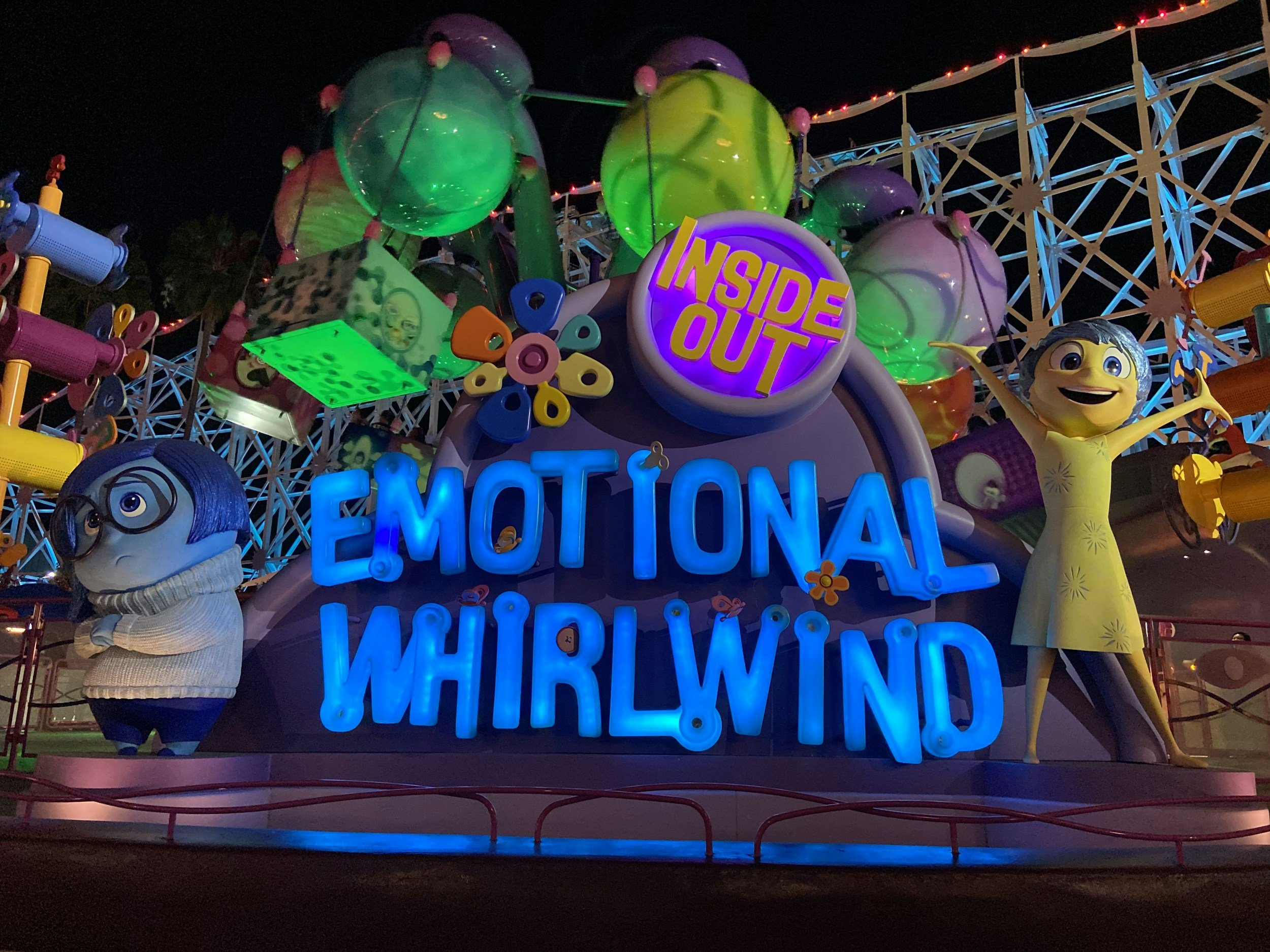
Everything so far comes from a tradition thousands of years old — Taoist philosophy, the language of organs and elements and spirits. So it might seem like a leap to say that one of the clearest modern explanations of it is a children's movie. But stay with me: if you've seen Pixar's Inside Out, you already understand the five spirits better than you think.
The movie follows Riley, an 11-year-old girl, and the five emotions running her headquarters: Joy, Sadness, Anger, Fear, and Disgust. Each one is a little being with a job, a personality, and a say in how Riley's life goes. Sound familiar?
That's because the movie is built on real psychology. Director Pete Docter consulted psychologist Dacher Keltner of UC Berkeley and Paul Ekman, the pioneer of basic emotions theory — the idea that a small set of emotions (happiness, sadness, anger, fear, disgust, surprise, and contempt) are universal across cultures. Keltner's verdict on the film: they really nailed it.
Here's what the movie gets right, from a psychology standpoint:
- Emotions color everything. When Riley is afraid, the whole world looks threatening, and her memories take on the tint of whatever she was feeling when they formed. That's real — your emotional state shapes perception and memory.
- Sadness is not the villain. Our culture is tough on sadness, but as Keltner told the filmmakers, sadness is a powerful trigger for seeking comfort and bonding. The film's turning point — Joy finally letting Sadness touch Riley's core memories, so Riley can cry and ask her parents for help — is exactly how healing works. Suppressing sadness doesn't make it go away; it makes everything go flat.
- Everyone has a signature emotion. Keltner says each of us leans toward one emotion the way Riley leans toward Joy, and that it changes over a lifetime. That's your starting spirit, by another name.
And here's the honest part: the literal control room is a charming fiction. Neuroscientist Lisa Feldman Barrett, who champions the theory of constructed emotion, points out that no single brain region is home to any one emotion — the brain doesn't have a fear blob or an anger blob. The movie also simplifies: five emotions instead of six or seven (surprise didn't make the cut), and Keltner himself wished for awe, love, and sympathy. But even Barrett agrees with the film's deepest lesson: emotions aren't problems to eliminate. They're information. And suppressing them has real costs.
Now here's where it gets exciting — because Pixar's five emotions map almost perfectly onto the five spirits:
- Joy → Shen (Heart). Joy leads headquarters, just as Shen is first among equals — the guiding light the others orient around. And joy is Shen's own emotion.
- Sadness → Po (Lung). Grief, and the necessity of letting go. Joy's mistake — exiling Sadness — is exactly what happens when Po can't do its job of release.
- Anger → Hun (Liver). Anger in the film is about being treated unfairly and blocked — precisely Hun's frustration when direction is blocked.
- Fear → Zhi (Kidney). Fear is Zhi's emotion. Fear imagines worst cases to keep Riley safe — Zhi's protective vigilance — but when it runs the show, everything freezes.
- Disgust → Yi (Spleen). Disgust keeps Riley safe from being poisoned: the guardian of what she takes in. Yi digests food and ideas — it's the spirit that decides what to absorb and what to reject.
The deeper link is the philosophy both models share: you don't fix your inner beings by banishing them. Joy's error is trying to sideline Sadness; the check-in's whole premise is to listen instead of fixing. Naming a part of yourself — giving it a face, a voice, a seat at the table — gives you a handle on it. Therapists call this kind of work parts-based, and it's why a children's movie can teach adults something true.
Pixar gave us a control room. Chinese medicine gives us something older and wider: not just five feelings, but five spirits with organs, bodies, elements, and an origin in the nothingness itself. The movie is a doorway. The spirits are the house.
So What Do You Do With All This? Enter the Five-Spirit Check-In
So now you can see the team — ancient wisdom on one side, a Pixar movie on the other, both pointing at the same truth. Which brings us to the real question: what do you actually do with all of this? Here's where it gets exciting. Instead of asking the vague question "how are you doing?" — what if we asked each spirit individually?
That's the heart of the Five-Spirit Check-In, a new way of working I want to share with you. It's simple, and it changes everything:
Before your first check-in: take the Five Spirits Assessment — a short questionnaire about your symptoms, feelings, emotions, and energy. It scores each spirit and shows you which one is calling the loudest, so you know exactly where to begin.
0. Begin in Wu. Before any questions, we pause. One breath, one moment of quiet nothingness — the same open space the spirits first gathered in. From that stillness, the answers come more honestly.
1. Check in. We go spirit by spirit — Shen, Hun, Po, Yi, Zhi — and ask how each one is doing. Your body answers honestly, even when your busy mind can't.
2. Listen. The spirit that's calling the loudest isn't a problem to fix. It's a part of you asking for attention.
3. Support. We give that spirit what it needs — whether that's acupuncture, breathwork, movement, rest, or simply being heard.
4. Recheck. We circle back and notice what's shifted. Often, when one spirit settles, the whole team relaxes.
No diagnosing, no fixing, no forcing. Just a regular conversation with the five parts of you that are already working so hard on your behalf — starting, as everything does, from a moment of stillness.
Which Spirit Is Calling You Today?
Take a second right now. Which of the five check-in questions landed hardest? That's your starting point — and it's probably the most honest answer your body has given you all week. Your spirits aren't mysterious. They're just waiting to be asked.
Further reading: Lorie Eve Dechar, Five Spirits: Alchemical Acupuncture for Psychological and Spiritual Healing (Lantern Books, 2006) — the Taoist map of the human psyche, and the inspiration for the "gifts" of each spirit above.
