
Light as Medicine

How Red Light Therapy Recharges the Powerhouses Inside Every Cell
Part 2 of our 5-part series, The Body Talks: Fascia, Mitochondria & Neuro-Wellness
Last week, we introduced your fascia as the body's largest sensory organ, the architecture of how your body communicates with itself. This week, we go one layer deeper. Past the connective tissue, past the muscle, past the cell membrane, all the way down to the tiny structures inside every cell that decide whether you wake up feeling vibrant or depleted.
Welcome to your mitochondria. And welcome to the surprising fact that one of the most powerful tools we have for upgrading them is something as ancient as sunlight.
If you have ever stepped outside on a clear morning and felt your whole body exhale, you already understand this intuitively.
Light is not just a visual experience. It is a nutrient.
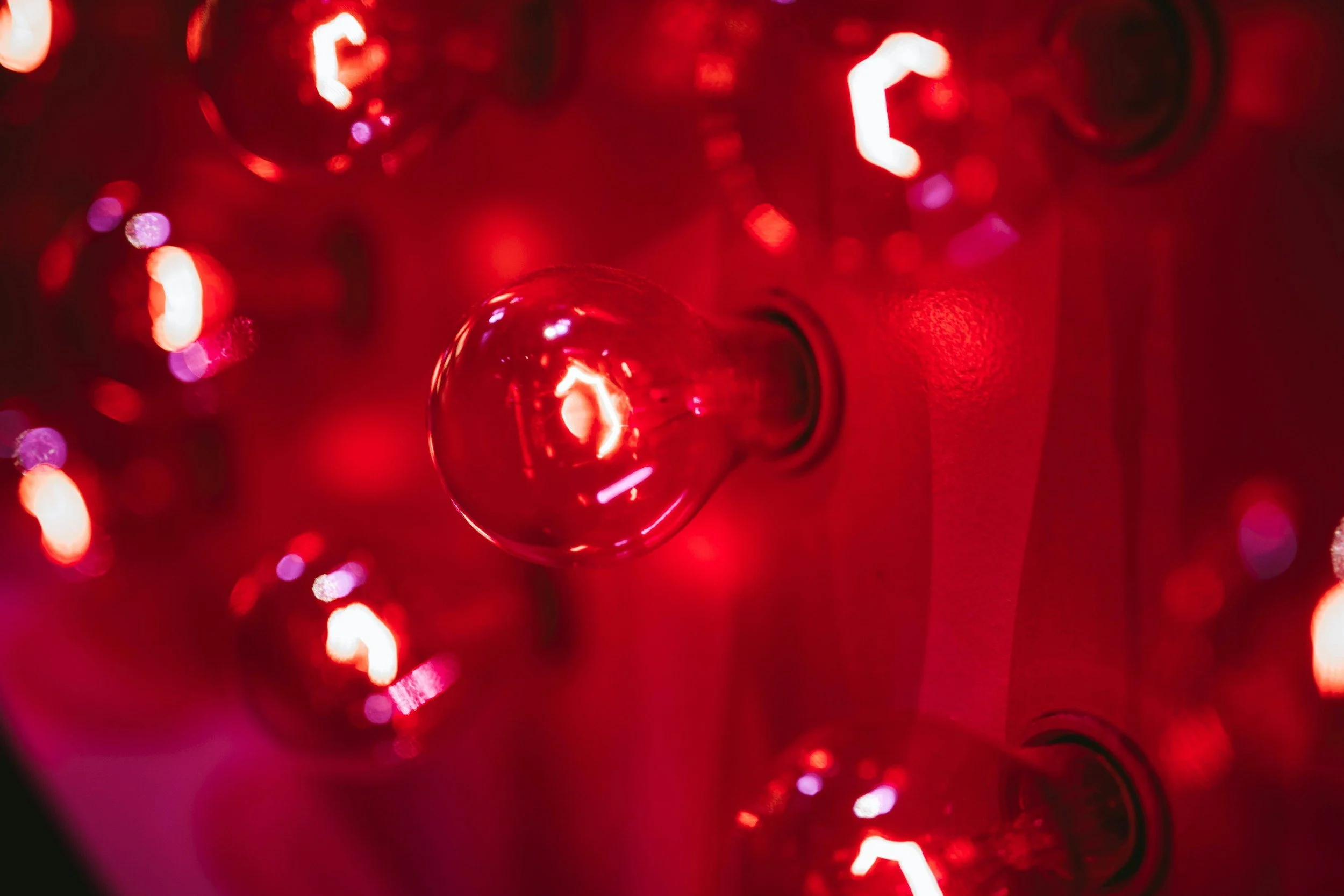
And specific wavelengths of red and near-infrared light, delivered in clinical doses, can do something remarkable: they can directly speak to the energy-producing machinery inside your cells and tell it to wake up.
This is the science of photobiomodulation, and it is one of the most exciting frontiers in functional medicine today.
A quick word about mitochondria
Before we get to the light, we need to talk about why mitochondria matter so much.
You may remember from a long-ago biology class that mitochondria are the "powerhouses of the cell." That label is accurate but woefully incomplete. Modern research has revealed that mitochondria are not just energy producers. They are sophisticated regulators of inflammation, hormone synthesis, calcium signaling, immune response, and even cellular decisions about life and death.
Every symptom you can name, fatigue, brain fog, stubborn weight, slow healing, low mood, dull skin, poor sleep, hormonal turbulence, traces back, eventually, to mitochondrial function.
When your mitochondria are humming, you feel alive. When they are sluggish or damaged, every system downstream pays the price. This is the heart of bioenergetic medicine: heal the cellular energy, and you give every other system the resources it needs to do its job.
The bioenergetic philosophy championed by researchers like Ray Peat goes further still. It teaches that the quality of our metabolism, our hormones, our resilience, and even our mood is downstream of one fundamental question: how efficiently are our cells producing energy? Mitochondria are where that answer lives.
Enter the light
Here is where it gets fascinating.
In the 1960s, a Hungarian researcher named Endre Mester accidentally discovered that low-level red laser light could speed wound healing in mice. He had been trying to test whether lasers caused cancer. Instead, he stumbled onto one of the most underappreciated biological phenomena of the last century: certain wavelengths of light, in the right doses, dramatically improve cellular function.
Today, after decades of follow-up research, we understand the mechanism in beautiful detail.
What this looks like in real life
When we layer red light therapy into care at Clinical Convergence, the changes our clients report are often subtle at first and then, almost suddenly, undeniable. More even energy through the day. Sleep that finally feels restorative. Skin that looks lit from within. Joints that move more freely. A nervous system that feels less brittle.
The research backs this up across nearly every system in the body.
Skin and collagen. Red light therapy stimulates fibroblasts (the cells that produce collagen) and increases collagen synthesis, leading to firmer, smoother skin and reduced fine lines (Skin Research and Technology, 2023).
Inflammation. Photobiomodulation has a measurable anti-inflammatory effect, shifting macrophages toward an anti-inflammatory profile and increasing the production of healing signals like IL-10 and TGF-β while decreasing pro-inflammatory cytokines like TNF-α (Lasers in Medical Science, 2025).
Fascia and connective tissue. Because PBM stimulates collagen synthesis directly in fascia, it pairs beautifully with the myofascial work we discussed in Part 1. The mechanical release opens the tissue, the light helps it rebuild.
Hormones, mood, and sleep. Red and near-infrared light have been associated with improved natural melatonin rhythms, support for hormonal balance during perimenopause, and improvements in PMS-related discomfort, mood, and energy in women aged 30 to 45 (Ubie Health clinical review, 2026).
Recovery and pain. Faster muscle recovery, reduced joint pain, and accelerated wound healing, well documented across the literature.
Brain. Transcranial photobiomodulation, where light is delivered through the skull to the brain, has shown measurable effects on cognition, mood, and neuroinflammation in early clinical trials.
And here is one of my favorite details: the effects persist. Mitochondrial responses to a single PBM session continue to play out for up to five days afterward, which is why consistent, regular sessions compound in their benefits over time.
The bioenergetic and Chinese medicine view of light
In Traditional Chinese Medicine, light is considered a form of Yang energy, the warming, activating, vitalizing force that animates the body. The morning sun rising over the horizon is not just symbolic. It is a literal infusion of bioenergetic information that tells the body to wake up, to circulate Qi, to begin the day's work.
When we sit indoors under blue-heavy fluorescent and LED lighting all day, then stare at screens long into the night, we are essentially feeding our bodies the wrong color of energetic information. Our mitochondria, our hormones, and our circadian rhythm all suffer for it.
Red light therapy, in many ways, is a clinical-grade way of returning a slice of natural sunlight's healing wavelengths back into a modern life. It does not replace going outside at sunrise (please still do that, every day if you can). But it offers a concentrated, repeatable dose of mitochondrial nourishment that we simply cannot get from modern indoor environments.
This is the elegance of bioenergetic medicine: it works with what your body is already designed to do, and it gives it the inputs it has been missing.
Why this matters for women in midlife
If you are navigating perimenopause, menopause, or the long postmenopausal years, your mitochondria deserve special attention.
Estrogen is mitochondrially protective. As estrogen declines, mitochondrial efficiency tends to decline with it. This is one of the unspoken reasons so many women experience that frustrating mix of fatigue, brain fog, weight redistribution, skin changes, and disrupted sleep during this transition. It is not a moral failing. It is a cellular energy problem.
Red light therapy offers a non-hormonal, deeply restorative way to support the mitochondrial side of that equation. Combined with nutrition principles we teach in the clinic, morning sunlight, and stress regulation, it becomes part of a coherent strategy for thriving through midlife rather than just surviving it.
What about doing red light at home?
Many of our clients ask whether home devices are worth it. The short answer is yes, with caveats. Look for FDA-cleared devices that deliver clinically validated wavelengths in the 630 to 850 nanometer range. Consistency matters more than intensity. Ten to twenty minutes, three to five times a week, is the typical evidence-based starting point.
That said, in-clinic devices deliver higher doses, broader coverage, and the ability to target specific areas (the cervical vagus region, fascial junctions, areas of inflammation) with much greater precision. We think of home use and clinic sessions as partners, not substitutes.
Light up your cells
We have several options for Clinical Red Light Therapy at Clinical Convergence. Book your session today by clicking on the link below.
Red Light Laser Therapy- This laser uses specific red and infrared light wavelengths to stimulate cellular repair, reduce pain, and calm inflammation in tissues. It works through photobiomodulation: the light energy is absorbed by cells (especially in mitochondria), boosting ATP production, improving circulation, and supporting faster healing of muscles, joints, nerves, and other soft tissues, all in a noninvasive, low‑heat way.
Green Tea Red Light Facial- A red light green tea facial pairs topical green tea’s antioxidant, calming properties with rejuvenating red light therapy to nourish and repair the skin at a deeper level. Green tea helps neutralize free radicals and soothe inflammation, while red LED light supports collagen production and cellular renewal, leaving the complexion smoother, brighter, and more resilient over time.
Sauna therapy with Red Light- Sauna therapy with red light combines the deep, relaxing heat of an infrared sauna with the cell-energizing effects of red and near-infrared light for a whole-body reset. The warmth of the sauna promotes circulation, sweating, and muscle relaxation, while the red light supports mitochondrial energy production, tissue repair, and reduced inflammation, leaving you feeling calmer, lighter, and more restored from the inside out.
Scientific references
Immunomodulatory effects of photobiomodulation. Lasers in Medical Science, 2025. Read the study
Hamblin M.R. et al. Mechanisms and Mitochondrial Redox Signaling in Photobiomodulation. Photochemistry and Photobiology, 2018. Read the study
Reverse skin aging signs by red light photobiomodulation. Skin Research and Technology, 2023. Read the study
Red Light Therapy for Women 30 to 45: Benefits and Next Steps. Clinical review, 2026. Read the article
Photobiomodulation, Cytochrome c Oxidase, and Nitric Oxide. The Dr. Kumar Discovery, 2026. Read the review
